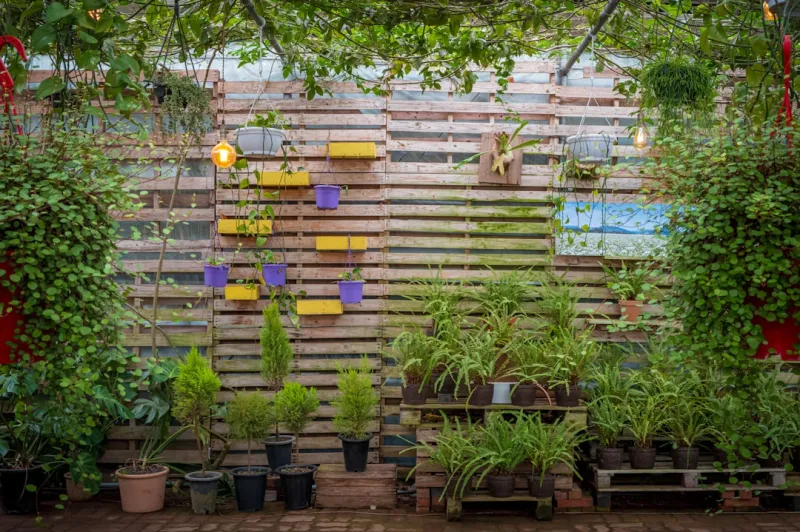
Introduction
Garden Wall Using Reclaimed Pallets And Drip Irrigation System
asymmetric design with different heights or staggering the pallets. This can add visual interest to your vertical garden.
Safety: Utilize safety goggles while cutting to protect your eyes. If using power tools, ensure you are familiar with their operation.
Step 4:
Overlay
- Landscape Fabric
What: Prepare the pallets for planting.
How: Cut a piece of landscape fabric to fit the back and bottom of each pallet. This fabric will help retain moisture and soil while providing drainage for excess water. Secure it in place using the staple gun or by stapling through the fabric and into the pallet.
Tips: Make sure the fabric extends slightly over the top to ensure the soil doesn't spill out. Secure it tightly, as a loose fabric might not hold well against the soil’s weight.
Safety: Ensure your hands are protected from staples or any rough edges during this process.
Step 5:
Attach
- Screws for Stability
What: Secure the pallets for vertical assembly.
How: Using the screw driver or drill, attach the pallets together if you plan to stack them or add lateral support structures. Depending on your design, you might want to secure horizontally adjacent pallets together to provide structural rigidity.
Tips: PReng the screw holes can prevent the wood from splitting. It's always best to use exterior-grade screws for a longer lifespan and more substantial support.
Safety: Keep your face away from the drill area when securing screws to avoid injury.
Step 6:
Secure the
- Garden Wall to the Ground
What: Ensure stability in your vertical garden wall by securing it.
How: Use wooden stakes or brackets to anchor the pallets into the ground. Pound them into the ground next to the pallets and attach them. If your pallets are particularly tall, you may need to use additional stakes or a Crossg system for support.
Tips: Check the vertical alignment using your level; readjust if necessary while securing.
Safety: When working with a hammer, hold the stakes securely to prevent slipping, and take care to avoid hitting your hands.
Step 7:
Fill with
- Potting Soil
What: Prepare the planting space for your vertical garden.
How: Carefully fill each pallet with potting soil. Make sure the soil is packed well enough to retain moisture but loose enough for root growth.
Tips: Mixing in some compost or Slowe fertilizer can provide an added nutrient boost for your plants.
Safety: Keep your workspace clear of debris during this process to avoid any tripping hazards.
Step 8:
Choose and
- Plant Your Vegetables and Flowers
What: Start incorporating your chosen plants.
How: Choose the plants that suit your growing conditions. Start with larger plants towards the bottom and smaller herbs or flowers at the top. Ensure to position them based on their light and water requirements.
Tips: Water the plants slightly before placing them into the soil to give them a head start, and use a trowel to carve out small holes if necessary.
Safety: Always maintain good posture while planting to avoid strain. Kneel or squat rather than bending over for longed periods.
Step 9:
Install the
- Drip Irrigation System
What: Set up a drip irrigation system for efficient watering.
How: After positioning your plants, follow the instructions of your drip irrigation system kit. Lay out your main tubing along the top, then attach emitters or spikes that go directly into the soil of each plant.
Tips: Adjust the water flow to ensure even distribution according to the needs of each plant, and test the watering system to identify spots that may need more or less irrigation.
Safety: Ensure connections are secure to avoid leaks and spills. Be cautious with care when working around any water sources or electric tools.
Step 10:
Maintain
- Your Vertical Garden Wall
What: Ensure the continued health and beauty of your garden wall.
How: Water as necessary, prune as needed, and monitor the health of your plants. Consider adding a balanced organic fertilizer every few weeks based on the growth rate and response of your plants.
Tips: Regularly check the drip irrigation system for clogs or issues. Adjust the amount of water based on the seasonal needs of your plants for optimal growth.
Safety: When pruning, use protective gloves and avoid cutting too close to the main stem, as this can harm the plant.
2026 •